Empire Heigths, Downtown Dubai, UAE

A New Flagship Enters the Ultra-Long-Range Battlefield

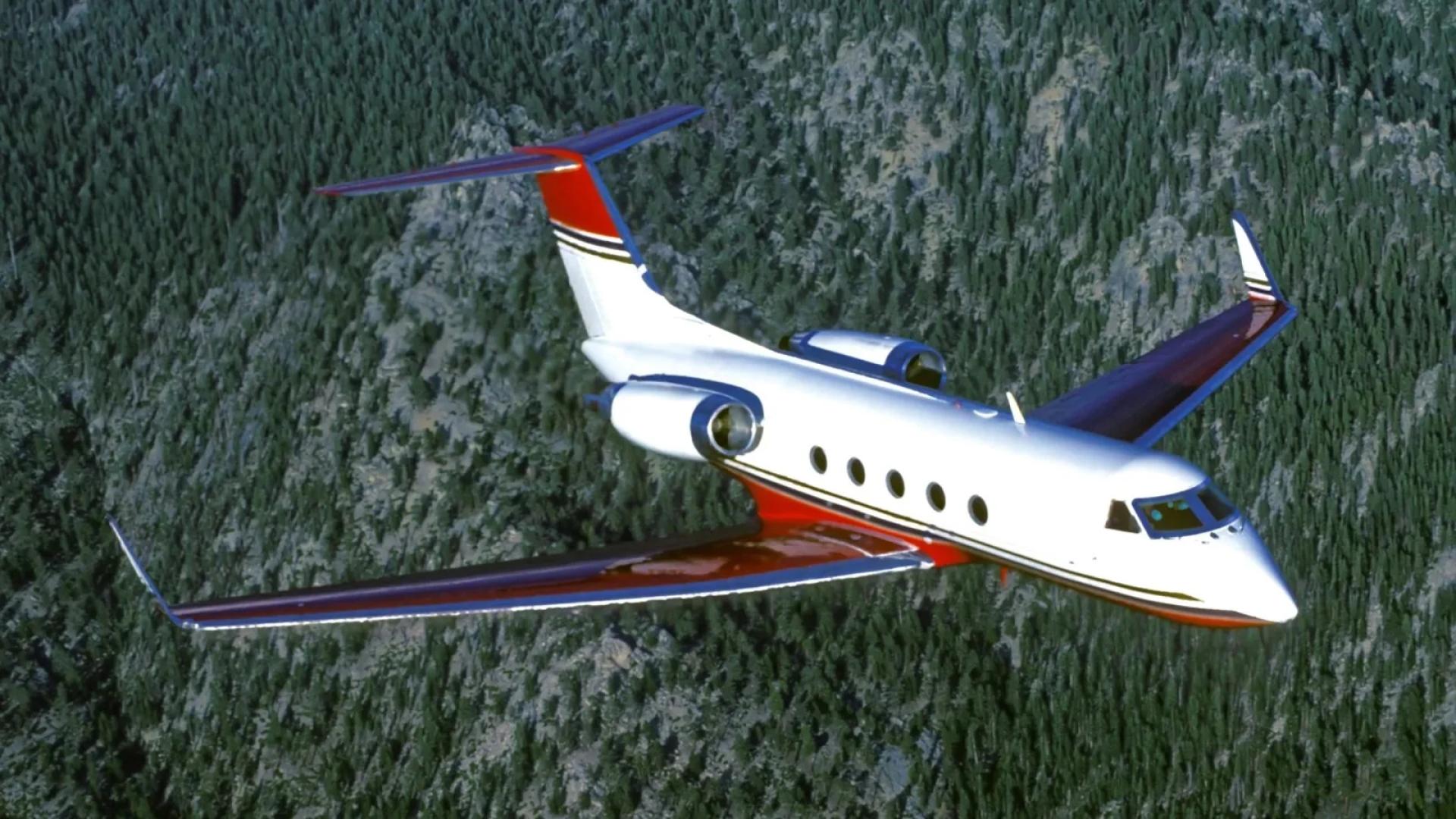
Dassault Aviation has officially unveiled its new flagship business jet, the Falcon 10X, marking a significant escalation in the ultra-long-range private aviation segment. The aircraft, priced at approximately $75–80 million, is positioned directly against top-tier competitors such as the Gulfstream G800 and Bombardier Global 8000. According to industry reporting from Reuters and Aerospace Global News, this launch reflects Dassault’s strategic push to compete more aggressively in the highest-value segment of business aviation.

This is not simply another aircraft introduction. It signals a broader shift in how manufacturers are approaching the ultra-high-net-worth segment, where demand remains strong and increasingly sophisticated. Buyers in this category are no longer evaluating jets purely on performance metrics but are placing equal importance on cabin experience, comfort, and onboard functionality. As a result, the Falcon 10X is entering a market that is not only competitive but also evolving in how value is defined.
Performance and Positioning: Competing at the Top of the Market

Performance and Positioning: Competing at the Top of the Market

The Falcon 10X enters the market with specifications that firmly place it in the ultra-long-range category. It offers a range of approximately 7,500 nautical miles and operates at speeds approaching Mach 0.925, enabling intercontinental routes such as New York to Shanghai without refueling. According to Dassault Aviation’s official specifications, this positions the aircraft competitively within the top tier of business jets.

However, competitors such as the Gulfstream G800 and Bombardier Global 8000 push the boundaries further in range and speed, with capabilities extending up to approximately 8,000–8,200 nautical miles. This creates a highly competitive environment where performance differences are becoming increasingly marginal. As a result, manufacturers are shifting their focus toward other differentiators, particularly those that enhance the onboard experience rather than purely technical capabilities.

Largest Cabin in Class: The New Competitive Weapon

Largest Cabin in Class: The New Competitive Weapon

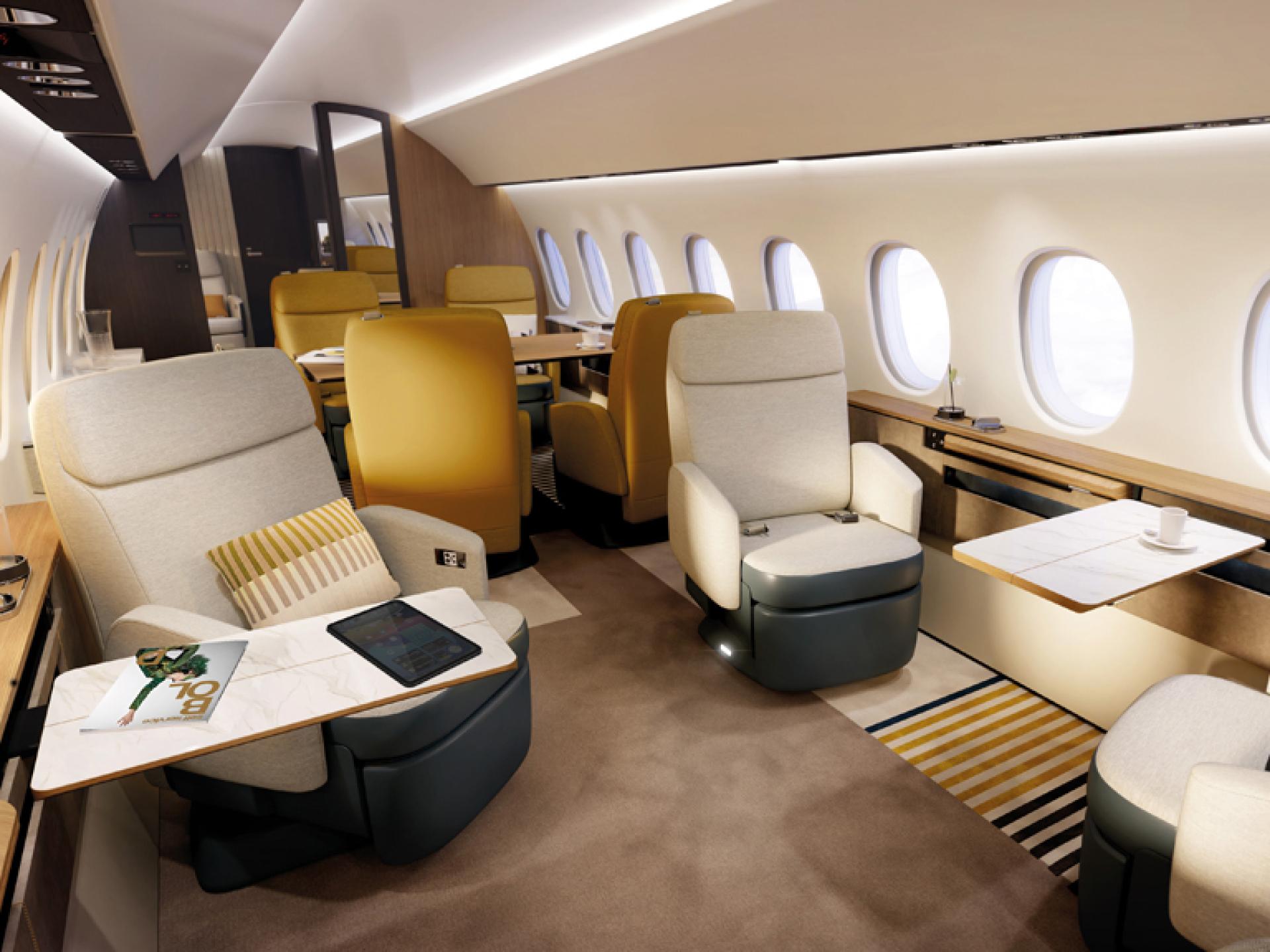
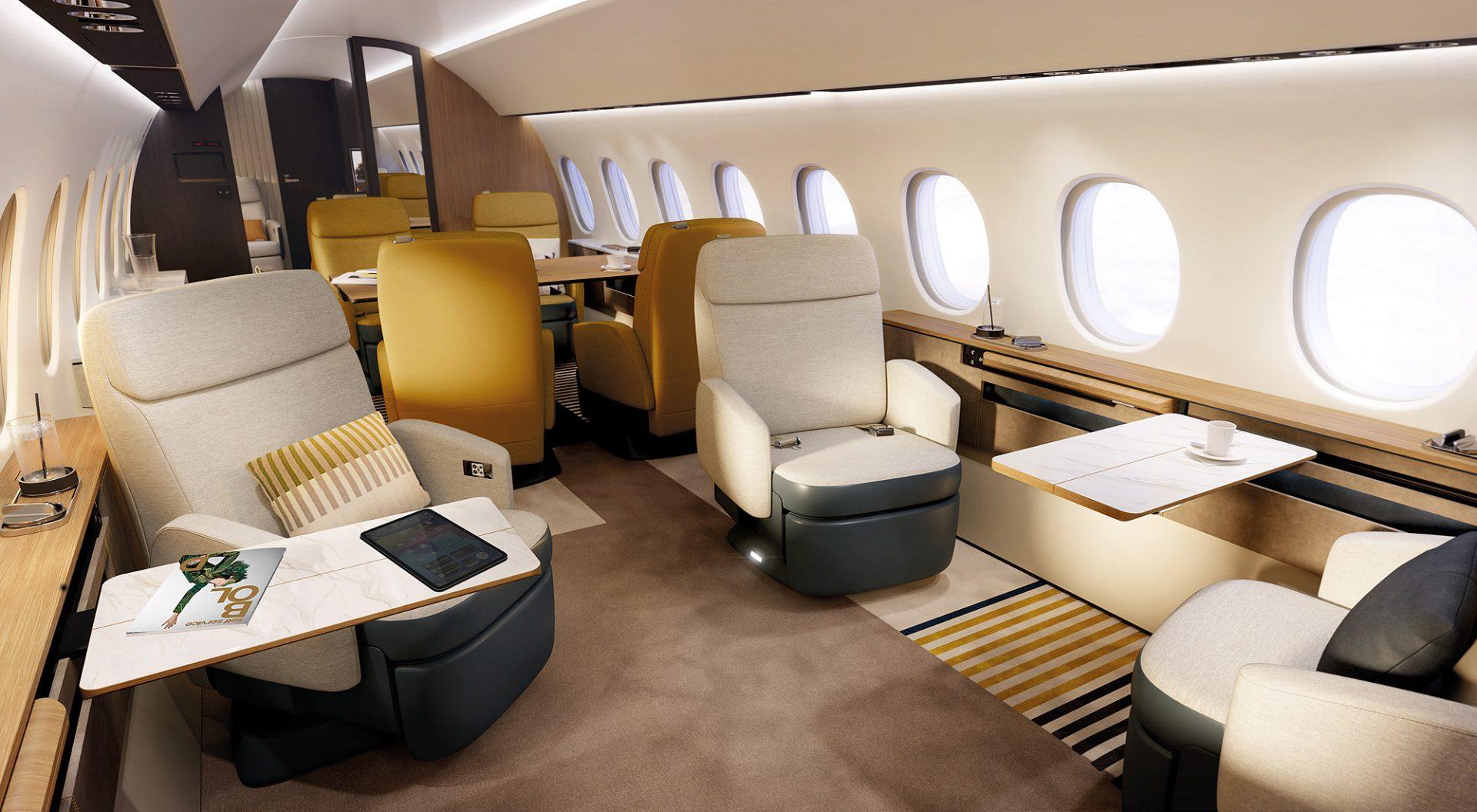
The most aggressive differentiator of the Falcon 10X is its cabin size. According to industry comparisons reported by Corporate Jet Investor and Dassault, the aircraft offers the largest cabin in its class, with approximately 2,780 cubic feet of volume. This represents a significant advantage in a segment where space is increasingly becoming a decisive factor.

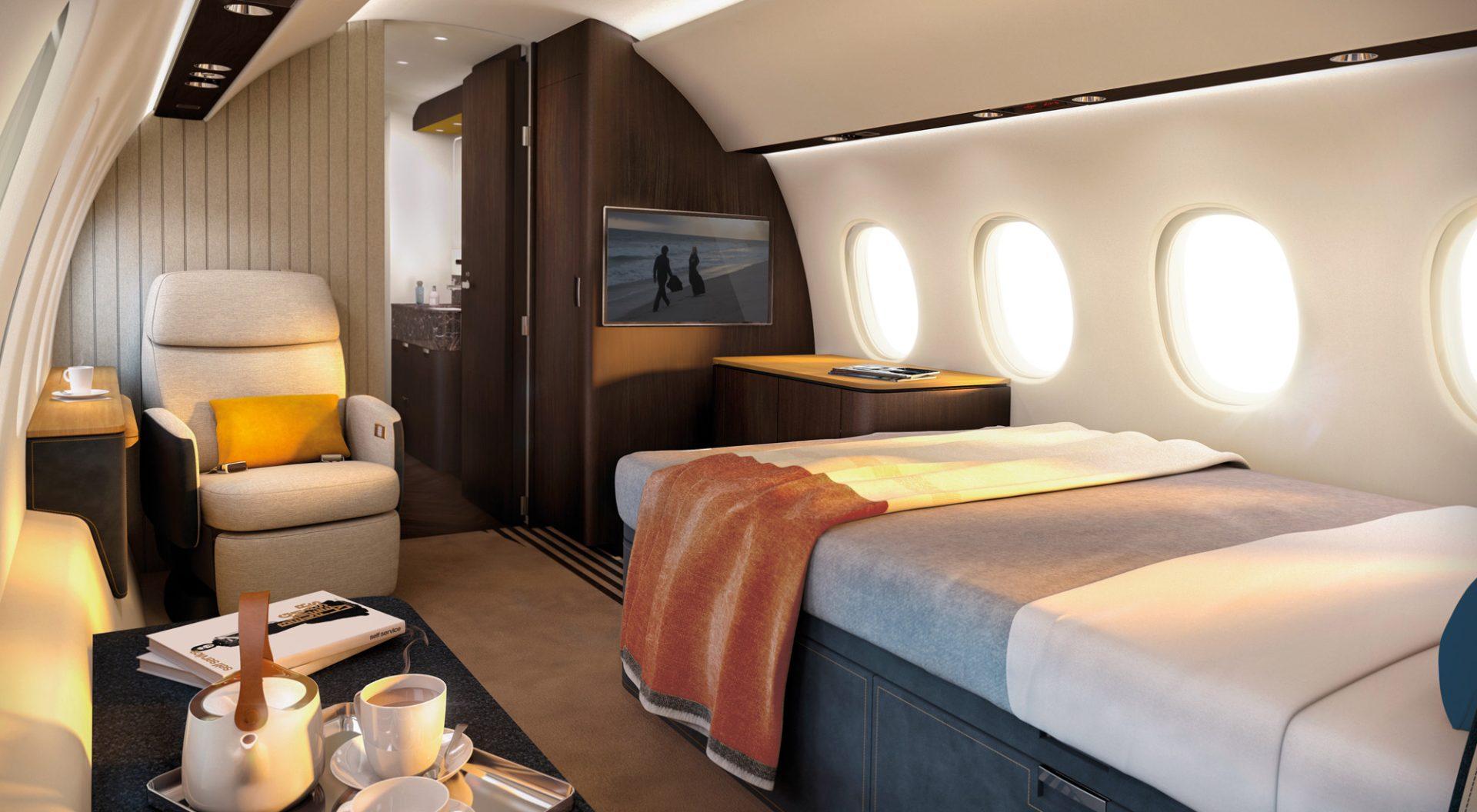
The aircraft is designed with a four-zone cabin layout, allowing configurations that include private suites, meeting areas, and extended living spaces. This level of flexibility transforms the aircraft from a transport vehicle into a multi-functional environment. The importance of cabin size is growing because it directly impacts comfort on long-haul flights and enables more sophisticated interior configurations. As flight durations increase, the usability of cabin space becomes just as critical as range or speed.

A Three-Way Battle: Dassault vs Gulfstream vs Bombardier

A Three-Way Battle: Dassault vs Gulfstream vs Bombardier

The Falcon 10X intensifies competition among the three dominant players in the ultra-long-range segment: Dassault, Gulfstream, and Bombardier. Gulfstream continues to emphasize performance leadership through aircraft such as the G700 and G800, focusing on speed, range, and brand dominance. Bombardier, with its Global 7500 and Global 8000 programs, has positioned itself as a leader in both range and high-speed capability.

Dassault’s approach differs strategically. Instead of competing solely on performance metrics, the company is focusing on redefining the cabin experience and integrating advanced control systems. According to Reuters reporting, this strategy is designed to appeal to a segment of buyers who prioritize onboard environment and usability over marginal gains in range or speed. This creates a new dimension of competition, where manufacturers must balance both technical performance and experiential value.

Interior Design Shift: From Luxury to Functional Living Space

Interior Design Shift: From Luxury to Functional Living Space

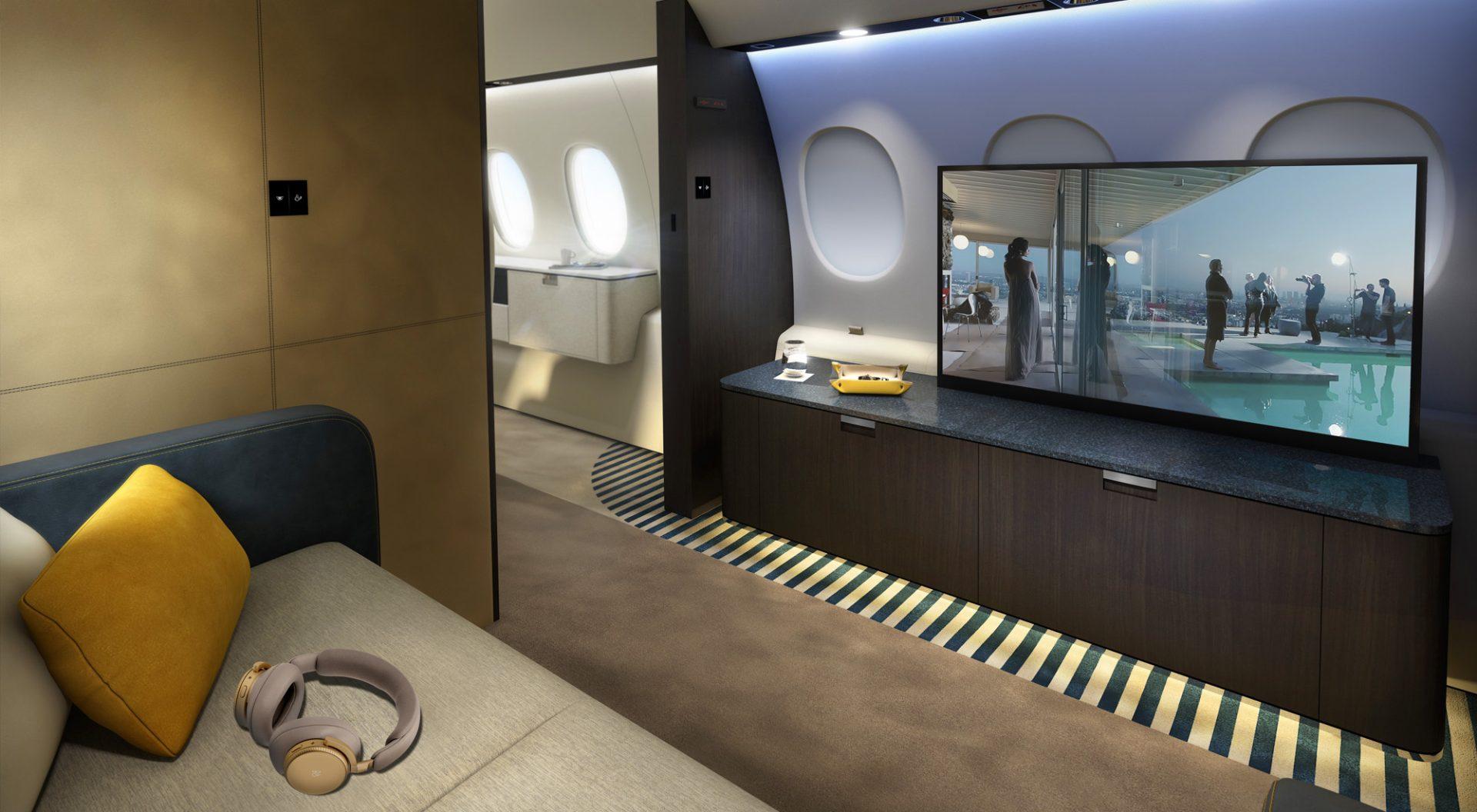
The Falcon 10X reflects a broader transformation in aircraft interior design. Modern ultra-long-range jets are increasingly being designed as functional living and working environments rather than purely luxury spaces. Dassault has emphasized features such as low cabin altitude, larger windows, and flexible layouts that enhance both comfort and usability during long flights.

According to industry analysis and manufacturer statements, the concept of the aircraft cabin is evolving toward a “flying residence” or “flying office.” This shift is driven by changing client expectations, where passengers demand not only comfort but also the ability to work, hold meetings, and maintain productivity while traveling. As a result, interior design is no longer a secondary consideration but a core element of how aircraft are evaluated and differentiated.

Market Implications: Demand at the Top Is Intensifying

Market Implications: Demand at the Top Is Intensifying

The launch of the Falcon 10X highlights a key trend in the business aviation market: sustained demand in the ultra-luxury segment. According to industry forecasts and reporting from Reuters, high-net-worth individuals and corporate buyers continue to drive demand for large-cabin, long-range aircraft. At the same time, OEM production constraints and extended delivery timelines are limiting supply.

This imbalance between demand and supply is creating a competitive environment where manufacturers can push higher price points and introduce more advanced features. The ultra-long-range segment is becoming increasingly strategic, as it offers higher margins and stronger brand positioning. As a result, competition among manufacturers is intensifying, with each new aircraft aiming to redefine expectations in terms of performance, comfort, and functionality.

A Strategic Shift in How Jets Compete

The Falcon 10X launch confirms that the definition of a top-tier business jet is evolving. While range and speed remain important, they are no longer sufficient as primary differentiators. The competitive focus is shifting toward cabin space, interior flexibility, and the ability to support long-duration travel in a comfortable and productive environment.

For manufacturers, this means competing across multiple dimensions simultaneously. For buyers, it introduces a more complex decision-making process, where the aircraft must be evaluated not just as a means of transportation but as a comprehensive environment that supports business and lifestyle needs. This shift reflects a broader transformation in private aviation, where value is increasingly defined by experience and functionality rather than purely technical performance.

Frequently Asked Questions

The Falcon 10X is estimated to cost around $75–80 million.

The range of the Dassault Falcon 10X is approximately 7,500 nautical miles.

The main competitors of the Dassault Falcon 10X are Gulfstream G800 and Bombardier Global 8000.

The Dassault Falcon X offers the largest cabin in its class and focuses heavily on interior flexibility.

The Dassault Falcon 10X will enter service later in the decade.